

About Poto
Poto is a cultural platform that supports Black, Indigenous, and queer artists whose practices engage the social, ecological, and historical conditions shaping contemporary life.
Through residencies, gatherings, exhibitions, and collaborative research, Poto creates space for artists to work across disciplines, outside rigid categories, and in sustained relationship with the communities and contexts that inform their work.
We prioritize practices that are formally experimental, grounded in lived experience, and in conversation with both ancestral and contemporary knowledge.
Poto’s name is born from potomitan, the central structure in Haitian spiritual rituals that supports movement and gathering. It reflects our role as a connective platform across the Black Atlantic, creating pathways for work already in motion to circulate toward new contexts, audiences, and opportunities.

The Team
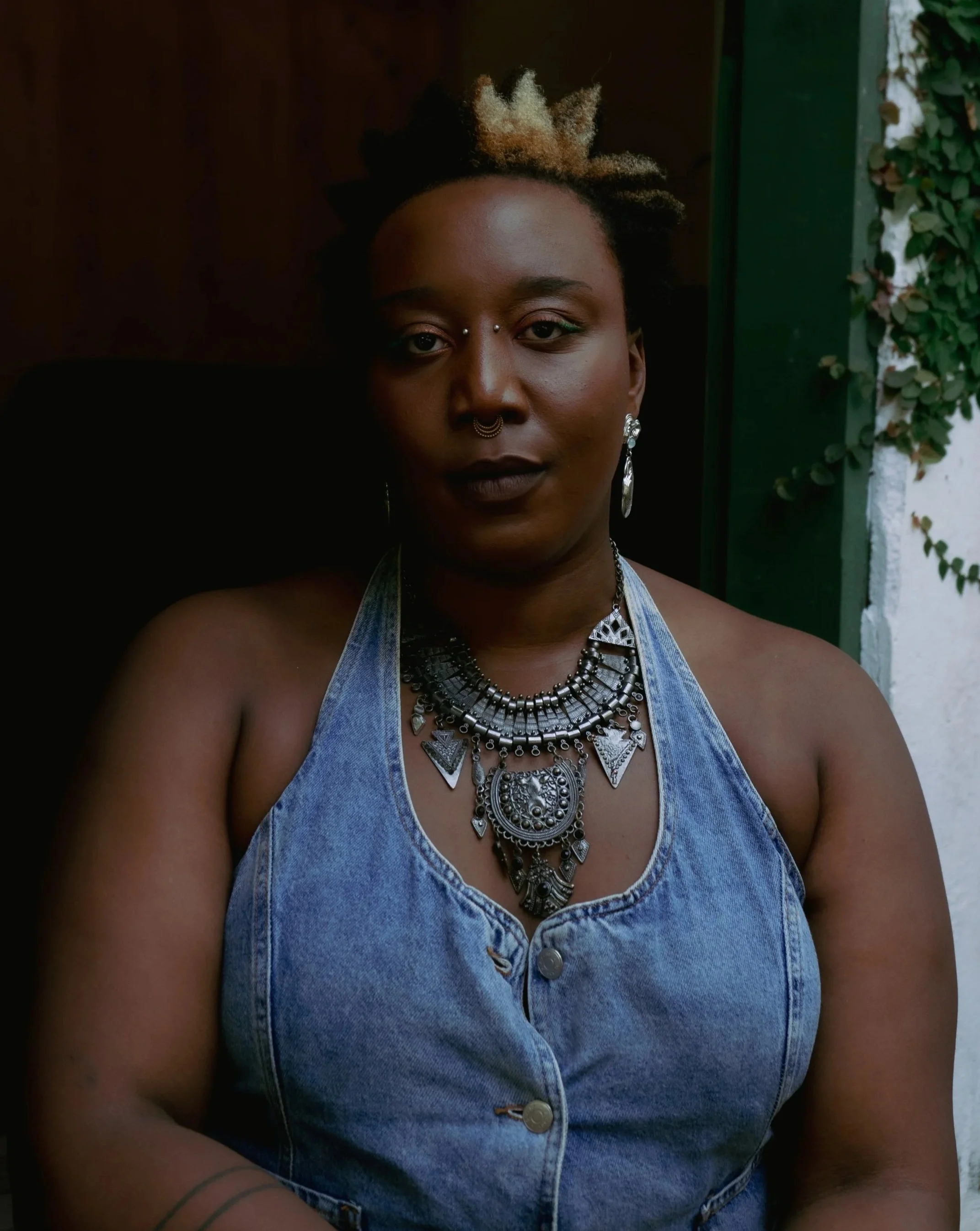
Isha Rosemond
Founding Creative Director
-
Isha (They/Them) is a Haitian-American artist, curator, and researcher whose work investigates the distance between colonial documentation and African Diasporic truth-telling.
Isha graduated from Texas State University, with work that draws on over a decade of self-directed research conducted across the Caribbean, Latin America and Western Africa with particular focus on Bahia, Brasil and Jacmel, Haiti. Isha is interested in the ways that the African Diaspora and Indigenous people, along with our inter-personal relationships, Spiritual technologies, and land-stewarding practices can teach the rest of the world how to return to the Earth in the face of climate change.
In 2026 Isha’s film work has screened at Museum of Art Rio de Janeiro, in 2025, their work was acquired by the permanent collection of the Centro Afro Carioca de Cinema Negro Zózimo Bulbul and exhibited at Kunstnernes Hus in Lillestrøm, Norway, as well as the Museum of Modern Art Bahia in Salvador, Brazil. In 2024, they were an artist-in-residence with Afrotonizar.Lab; a student of the Curadorias Afrocentradas course at the Afro-Brazilian Museum at the Federal University of Bahia, Brazil (UFBA); and an inaugural participant in ZUMVI Arquivo Fotográfico’s archival photography course for Black researchers and photographers —a Salvador-based collective whose work was featured in the 2023 Venice Biennale. Previously, Isha also held residencies at SOMArts San Francisco (2023) and Mirante Xique Xique in Bahia (2022). Their work has been recognized with the Alternative Exposure Award (2022), Individual Artist Changemaker Fellowship from the State of California (2021), and the Reflection Fund for Artists (2021).
Alongside their creative and research-based practice, Isha has worked as a Senior Policy Analyst addressing queer health disparities at a national public health network. Prior to that, they led the design and facilitation of a survivor-led advocacy program for Black women and gender-nonconforming people impacted by sexual exploitation in Oakland, California.
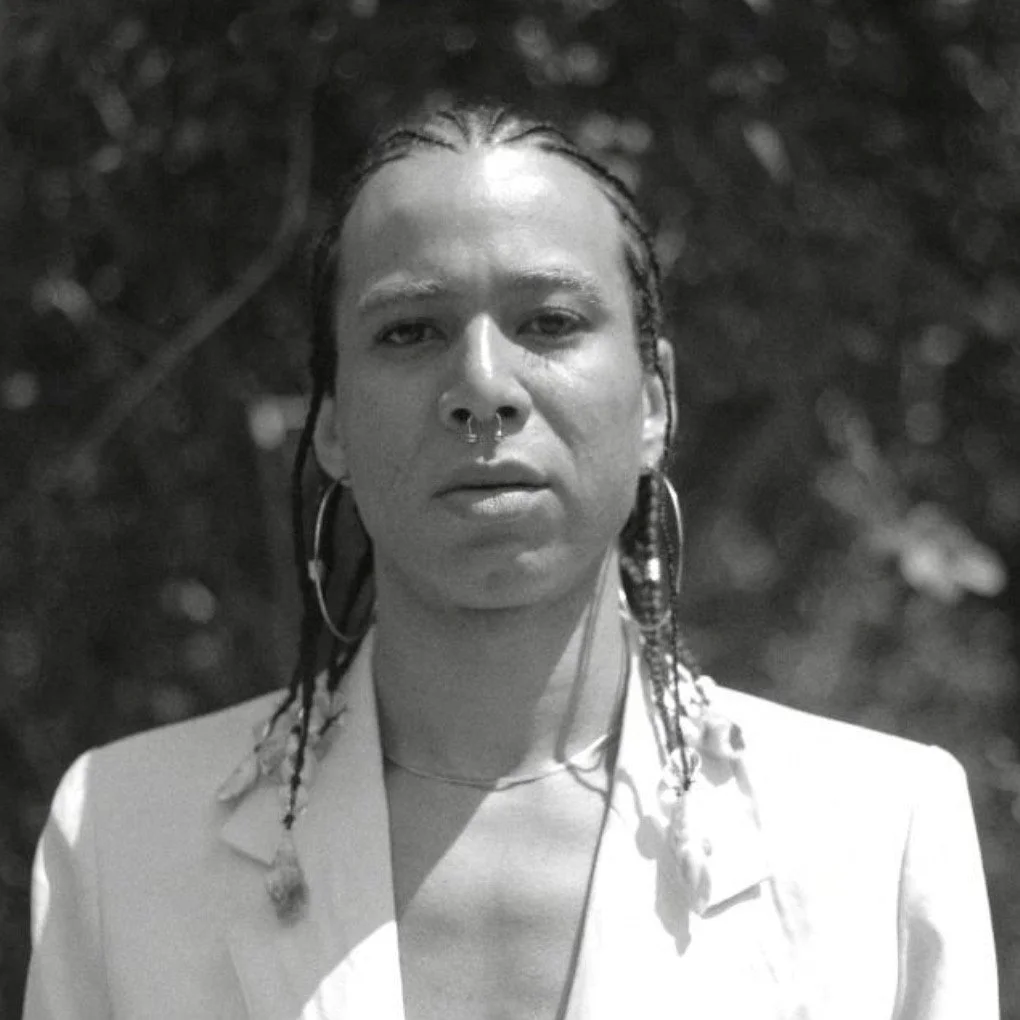
Jono Lena
Director of Programs
-
Jono Lena (She/They) A transdisciplinary artist and researcher, writer, producer, and cultural organizer focused on projects in the fields of audiovisual and performance. Working between Salvador and Campo Formoso (Bahia, Brazil), her research revolves around gender, identity, ancestry, and race, creating images, films, performances and text pieces that seek fury and liberation for trans, queer and gender non-conforming folks. She was part of StoneCrabs Theatre Company (London) from 2012 to 2014, and her first solo performance, The Reinvention of Narcissus, took place in 2014 at Espacio Gallery (London). In 2016, she started her degree at UFBA, where she deepened her studies in performance, later joining and co-creating Coletiva Sara Mandaia from 2017 to 2019. In 2020, she began experimenting with photo and video performance, and in the same year released her work “Máscaras Possíveis”. In 2022, she developed the transdisciplinary project”de dentro, pra fora, pra dentro”, combining 8 poems and illustrations, and 1 video performance, which was screened at V Mostra Cine Diversidade (Rio de Janeiro, 2022), Odù Film Festival (Salvador, 2023), Indie Memphis (Memphis, USA, 2023), the Bahia Performance Biennial (Salvador, 2025), and the Queer Arts Justice Summit (Salvador, 2025). In 2023, she took part in her first group exhibition with the diptych “don’t tell them you woo me at two am”, in the exhibition Omi Wo Ile, curated by Isha Rosemond and Ashara Ekundayo, at Casa Só Movimento (Salvador). In 2024, she premiered her performance “Olóòkun_LAVA_PÉS” at the Museum of Contemporary Art of Bahia (MAC). Awarded Artist Changemaker in 2022 by the international organization Global Fund for Women, she currently serves as the Director of Programs at Poto. Her new project, FENDA, released in December 2025, is a research-based work on the social and hetero-cis-patriarchal geography of her hometown, Campo Formoso, in which the artist draws on the life narratives of three dissident individuals from the city to compose three video performances. Lena holds a Bachelor’s degree in Interdisciplinary Arts from UFBA (2019) and is currently pursuing a degree in Psychology at the same institution.
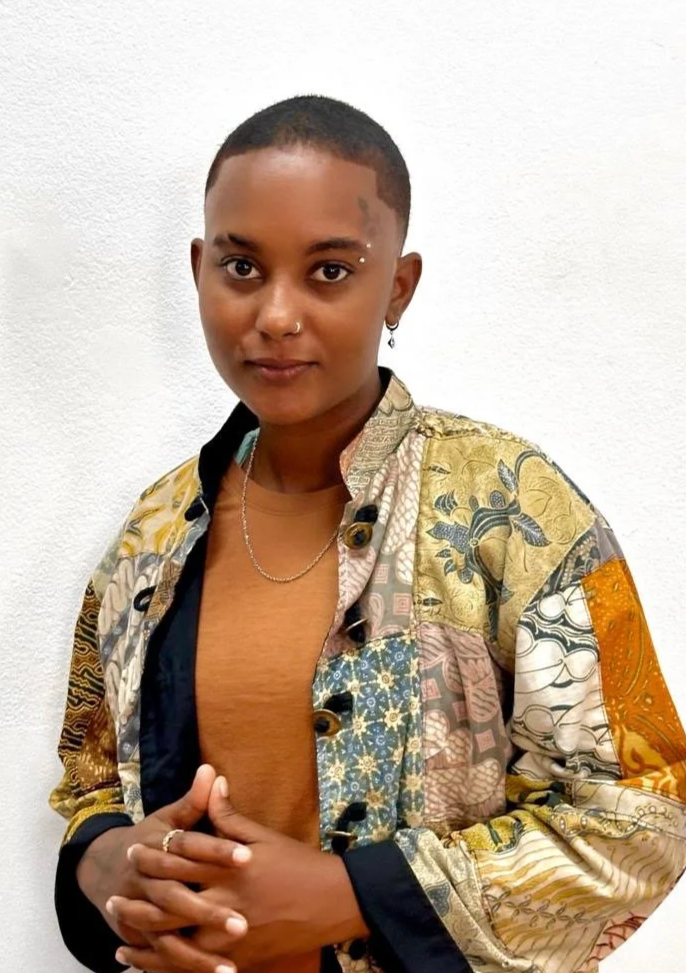
Tuzi Camb
Cultural Strategist
-
Tuzi Camb (They/She) is a cultural worker, artist, and educator born and raised in Salvador, Bahia. Their practice spans festival production, community education, political organizing, and artistic creation, rooted in the Afro-Brazilian histories and living culture of the city they call home. They are currently pursuing a degree in Archival Science at the Universidade Federal da Bahia (UFBA).
At Poto Globo, Tuzi works as Cultural Strategist, shaping how institutional partners and participants encounter and move through cultural programming. With more than a decade of production experience, in 2025 they served as as Assistant Producer of one of the largest festivals in Latin America, Afro Futurismo.
As an artist, Tuzi works across clay, performance, and multimedia installation. In 2025, they were commissioned by the Center for Cultural Power to create Templo para Ogum sobre o mar, entre o Ferro e o Sal ("Temple for Ogum over the sea, between Iron and Salt"), a multimedium altar installation presented at the international Queer Arts & Justice Convening.